













How to Style Coastal Wall Art in Indian Homes: 10 Seascape Prints for Every Room
How to Style Coastal Wall Art in Indian Homes
From serene bedrooms to vibrant living spaces, discover how ten carefully curated seascape prints can transform your home into a coastal sanctuary—even hundreds of miles from the nearest shore.
There's something universally calming about the ocean—the rhythmic crash of waves, the endless horizon, the way sunlight dances on water. In Indian homes, where space is precious and the tropical climate demands light, airy interiors, coastal wall art offers more than just decoration. It brings a breath of sea air into urban apartments and suburban villas alike.
But styling coastal art isn't about randomly hanging beach scenes on your walls. It's about understanding color palettes, room dynamics, and the emotional weight each piece carries. After all, a turbulent seascape in charcoal tones tells a different story than a sun-drenched Mediterranean vista.
The Psychology of Coastal Colors
Coastal art thrives on a specific color vocabulary: turquoise, teal, sand beige, soft grays, and whites. These aren't arbitrary choices—they're deeply connected to how we experience water and sky. In Indian homes, where bold colors often dominate traditional décor, coastal art provides a visual reset, a calming counterpoint to vibrant textiles and ornate furniture.
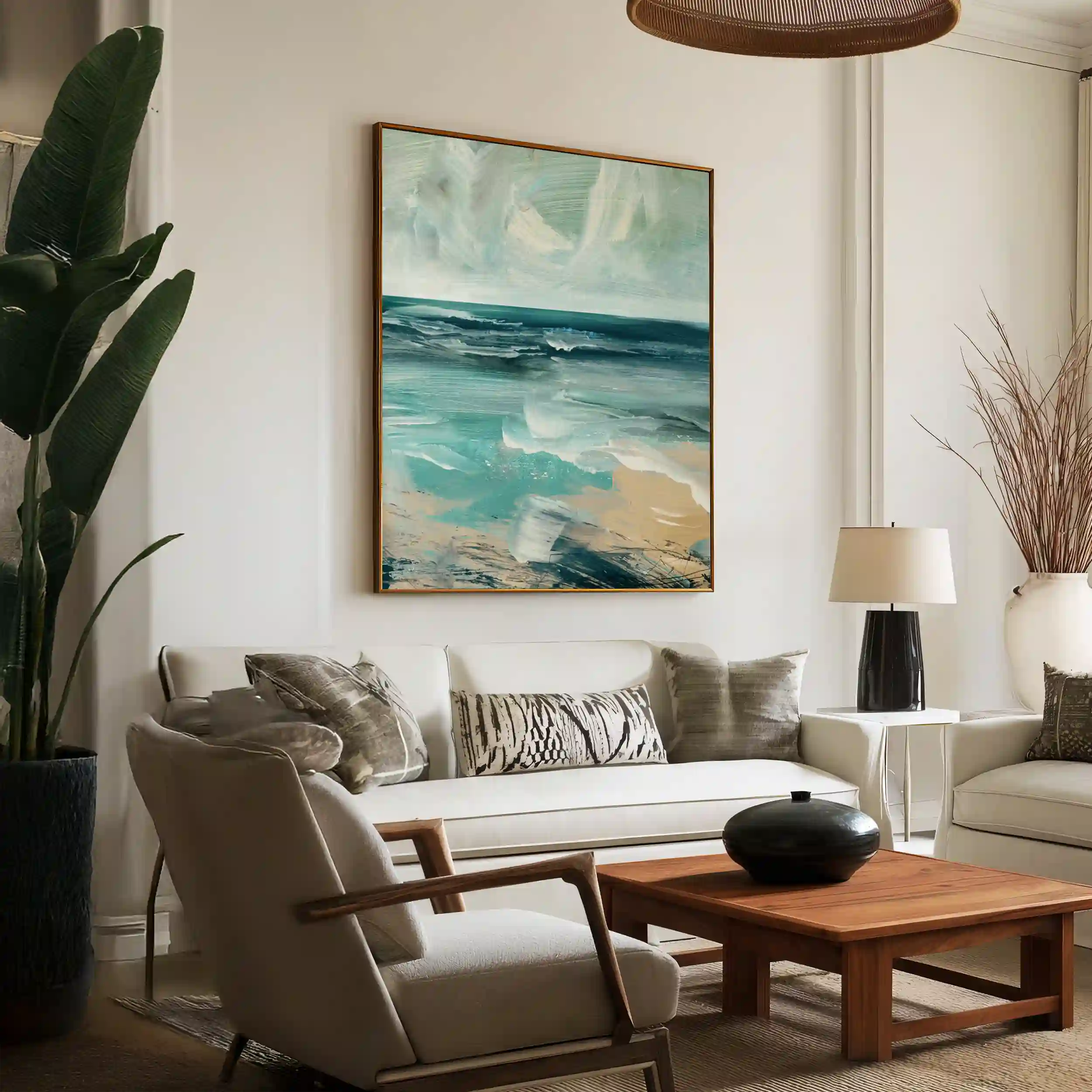
Consider St. Ive - Modern Abstarct Wall Art, with its sweeping turquoise brushstrokes mimicking ocean currents. This piece doesn't just depict water—it evokes the sensation of standing at the shore, feeling the pull of the tide. Pair it with natural wood furniture and cream coloured walls, and you've created a serene vignette that feels effortless.
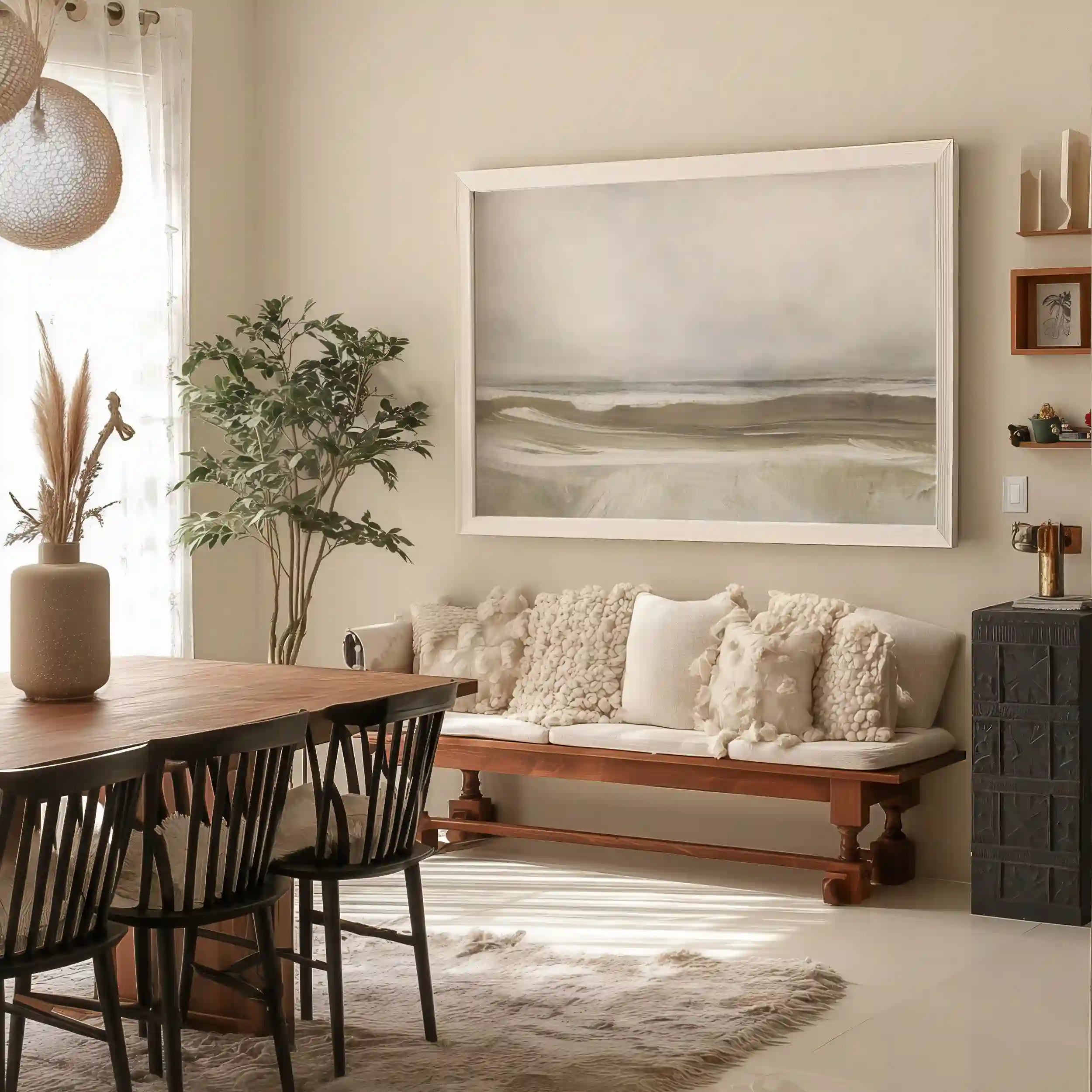
Neutrals like Cloud Abstract painting and our Sea Airlandscape print work differently. They're the wallflowers of coastal art subtle, textured, almost meditative. These pieces don't demand attention; they invite quiet contemplation. Perfect for spaces where you need calm: bedrooms, home offices, meditation corners.
Living Rooms: Where Energy Meets Serenity
Living rooms are the heart of Indian homes—spaces for chai with guests, loud family debates, and quiet evenings with a book. Coastal art here needs to hold its own without overwhelming the room's social energy.
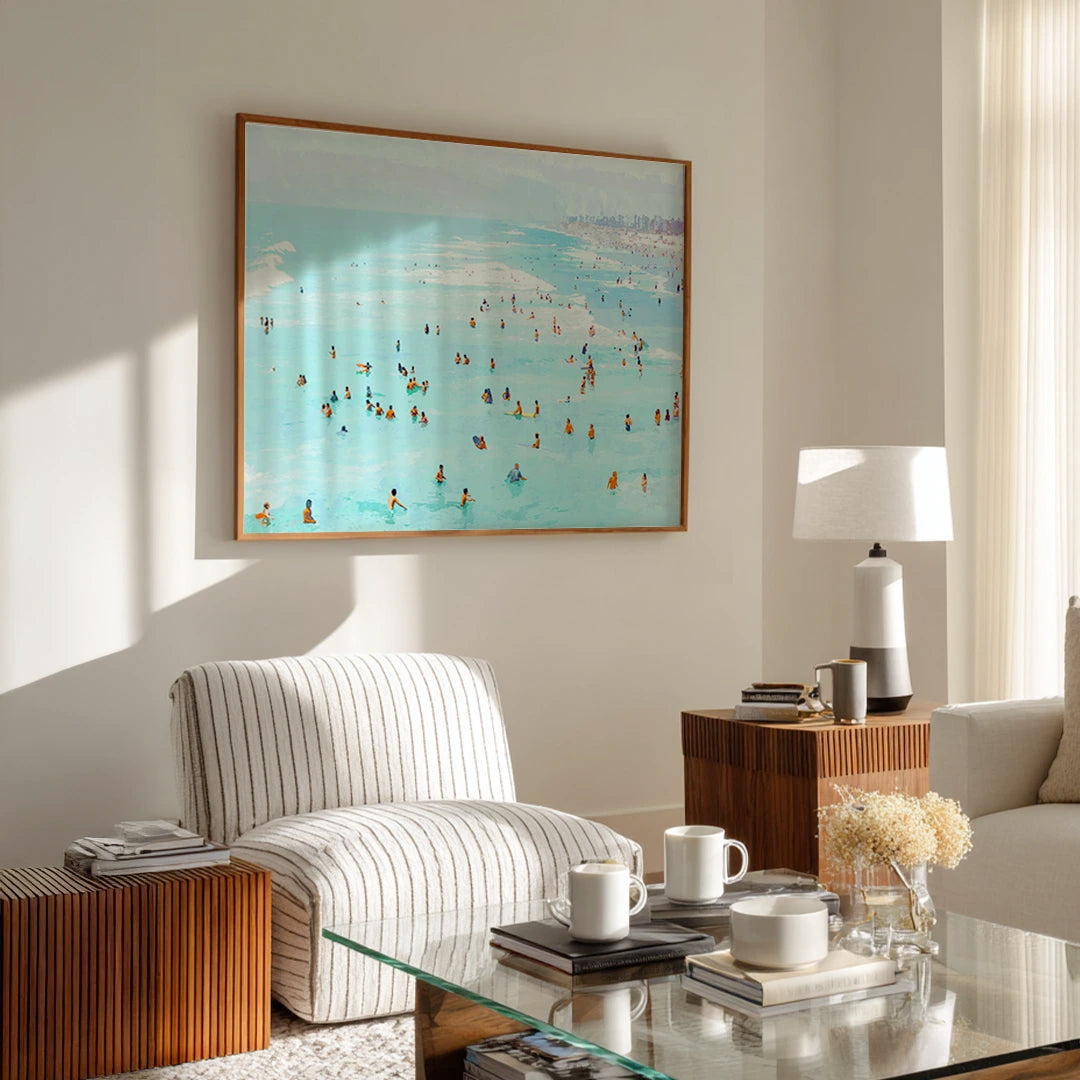
Hot Summer Day is a masterclass in controlled chaos. The vibrant turquoise water dotted with tiny beachgoers creates visual interest without being jarring. It's playful, energetic, suitable for a family living room where kids play and adults unwind. Hang it above a low-slung sofa in a room with plenty of natural light, and it becomes a conversation starter.
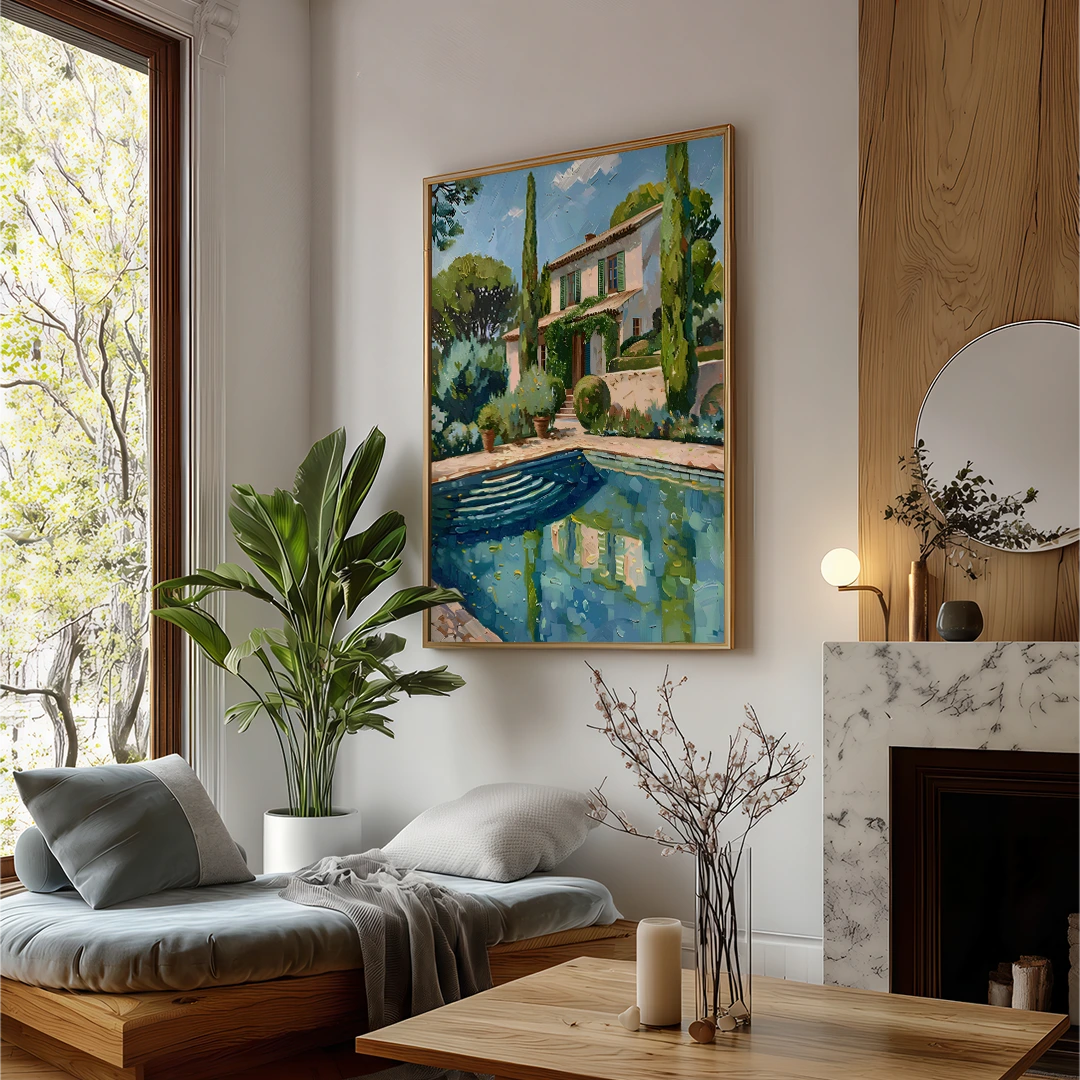
For a more refined aesthetic, Quiet Luxury offers understated elegance. The Mediterranean villa framed by cypress trees and a shimmering pool speaks to aspirational living—the kind of image you'd find in Architectural Digest. This works beautifully in minimalist living rooms with clean lines, marble accents, and statement furniture.
Bedrooms: Sanctuaries of Rest
If there's one room where coastal art truly shines, it's the bedroom. The palette—soft blues, sandy beiges, gentle grays—aligns perfectly with sleep science. These colors lower heart rate, reduce anxiety, and promote restful sleep.
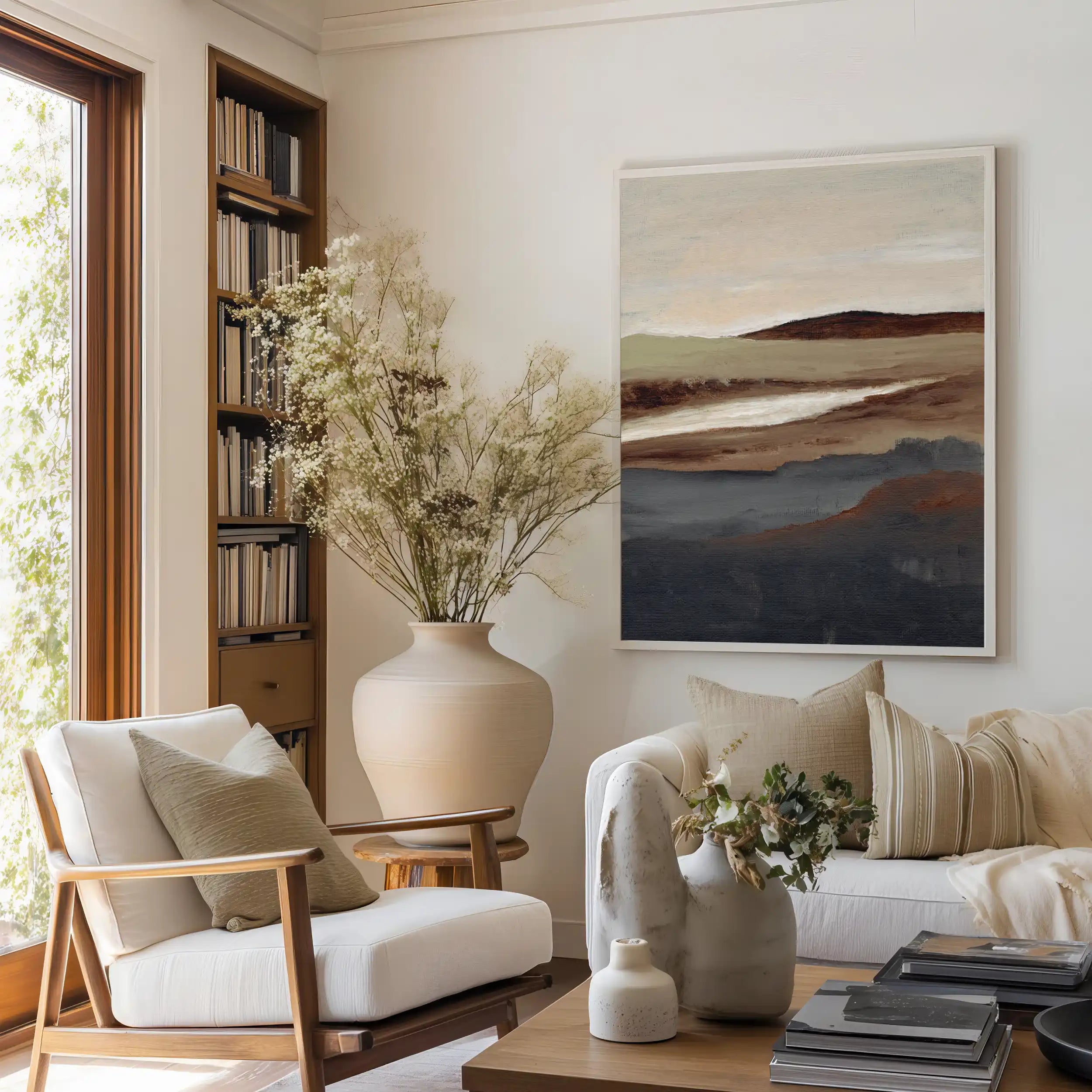
Westcountry is ideal for master bedrooms. The muted tones—dove gray sky, olive-tinged fields, distant blue hills—create a sense of expansive calm. It's the visual equivalent of a deep breath. Pair it with linen bedding in oatmeal or dove gray, and avoid overly bright accent colors.
For guest bedrooms or children's rooms, something with more personality works better. September Coast, with its pink-hued sky and mountain silhouettes, adds warmth without sacrificing serenity. It's romantic without being saccharine—perfect for a young couple's first apartment or a teenage daughter's sanctuary.
Bathrooms & Spa Spaces
Indian bathrooms are increasingly designed as personal spas—marble counters, rainfall showers, freestanding tubs. Coastal art amplifies this luxury spa aesthetic.
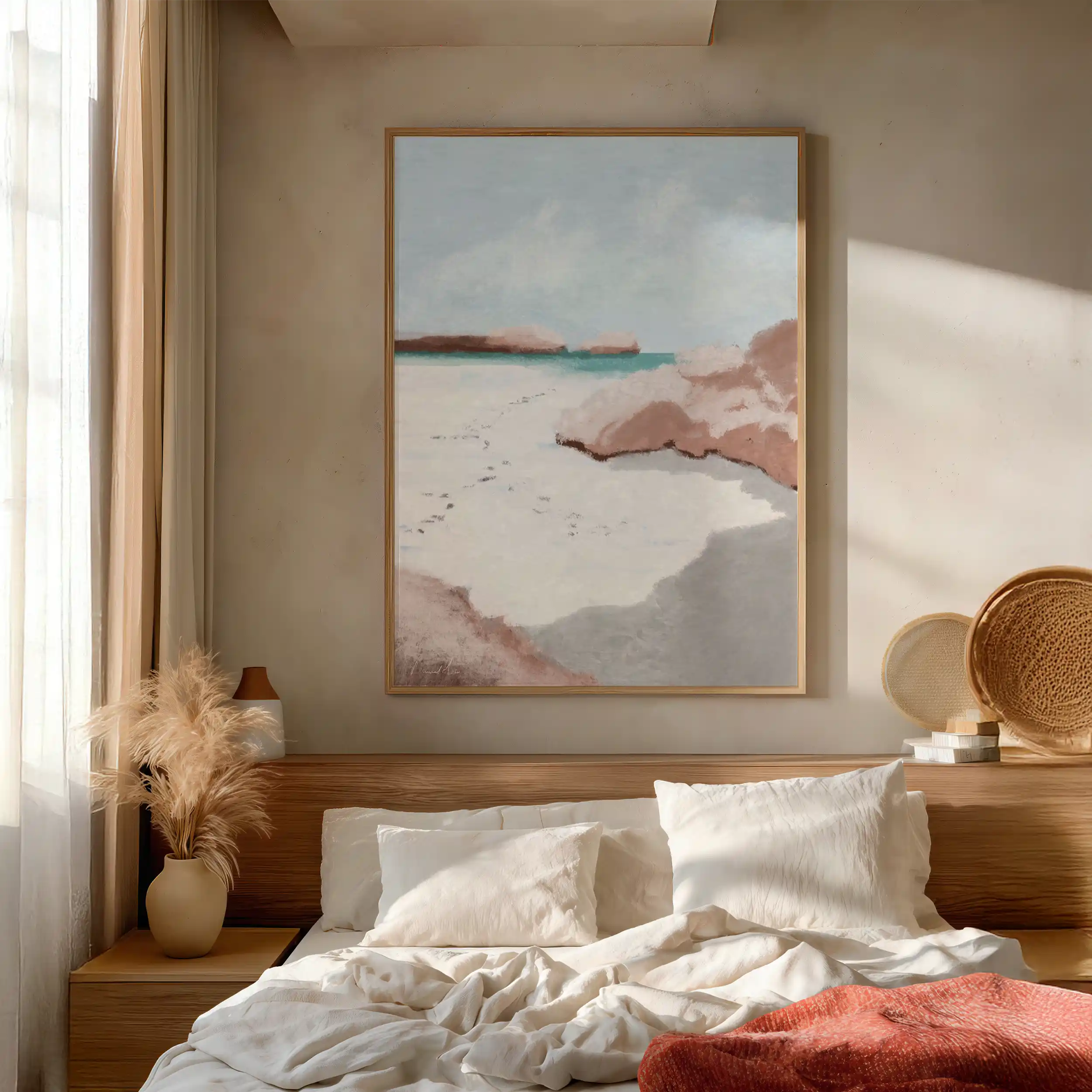
Litore, with its soft terracotta and blue tones, brings warmth to bathrooms that might otherwise feel clinical. The abstract beach scene doesn't demand attention—it simply exists as a calming backdrop while you soak in the tub.
For powder rooms or guest bathrooms, The Island offers a moody alternative. The charcoal and black seascape creates drama in small doses, perfect for a space guests only occupy briefly.
The Art of Placement
Coastal art loses its impact if poorly placed. Here's what works:
Height matters. Hang art so the center sits at eye level (roughly 57-60 inches from the floor). In rooms with tall ceilings, go slightly higher to maintain visual balance.
Consider lighting. Natural light enhances coastal art's airy quality, but avoid direct sunlight, which fades prints over time. Use picture lights or track lighting for evening ambiance.
Create groupings thoughtfully. A single large piece (like Serene View) makes a bold statement. Multiple smaller pieces require careful curation—keep color palettes cohesive and frames uniform.
Beyond the Beach: Coastal Minimalism
The beauty of coastal art in Indian homes isn't literal beach recreation—it's about borrowing the emotional resonance of water, sky, and horizon. You don't need seashells or driftwood or rope accents. In fact, those clichés often undermine the sophistication coastal art can bring.
Instead, pair coastal prints with:
• Natural materials: rattan, jute, unfinished wood
• Organic textures: linen, cotton, wool
• Minimal accents: ceramic vases, single-stem florals, brass candleholders
The goal is cohesion, not theme-park literalism. Coastal art works because it suggests escape, calm, and expansiveness—qualities we crave in dense urban environments.
Final Thoughts
Styling coastal wall art in Indian homes is an exercise in restraint and intentionality. Choose pieces that speak to your emotional needs—calm for bedrooms, energy for living spaces, drama for statement walls. Respect the color palette, avoid over-accessorizing, and let the art breathe.
Whether you're drawn to the vibrant turquoise of St. Ives or the moody minimalism of The Island, coastal art offers a timeless aesthetic that adapts to changing trends, growing families, and evolving tastes.
The ocean, after all, has been inspiring interiors for centuries. Your walls are simply the latest canvas.





Leave a comment